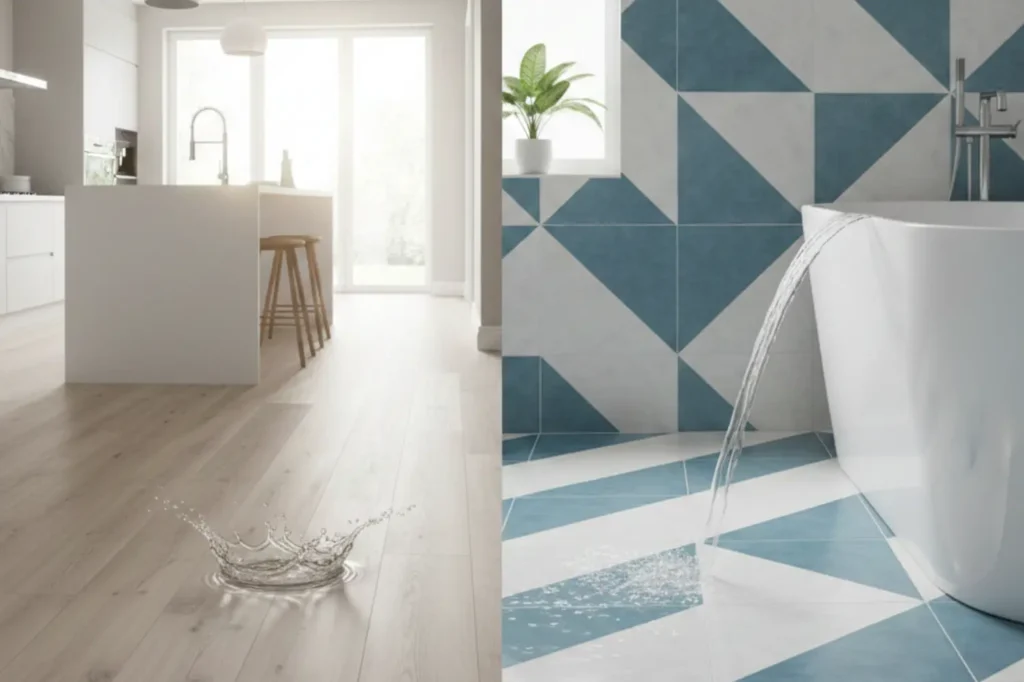
Kitchen and bathroom flooring needs more durability and moisture-resistance than any other room in the house. Spills and water splashes happen, humidity lingers, and one small leak can turn into a costly repair. That is exactly the reason why choosing waterproof flooring is more than a simple design choice; it is a practical one.
You can think of the flooring in your kitchen and bathroom like a rain jacket. While its appearance and aesthetic appeal are undoubtedly important, you wouldn’t want something that leaks the first time it gets wet. Its comfort, durability, and protective abilities are, above all, the most important factors.
Why Waterproof Flooring Matters
Water damage can be a sneaky issue; it doesn’t always come from huge floods. On the contrary, it is often small and subtle. Moisture in the room builds up, seeps into the seams, and over time, the flooring begins to warp before you can even tell there is an issue. This is why waterproof flooring has become a staple of modern homes.
In the kitchen and bathrooms, the flooring should be able to handle the daily levels of moisture and humidity without damage or warping. Materials that absorb water might look fine for a certain amount of time, but within a few years, they will start to show signs of the accumulating damage. Waterproof flooring options create a barrier that protects not only the surface of the flooring but also the subfloor underneath.
Waterproof Vinyl Plank Flooring
Waterproof vinyl plank flooring has quickly become one of the most popular choices among flooring options for wet areas of the house. It is designed to completely resist water, and not just be able to withstand it. Luxury vinyl plank flooring is composed of a rigid core that is sealed with waterproof edges to prevent any moisture from seeping in.
One of the most appealing aspects of vinyl planks is their ability to mimic the appearance of real wood flooring. The warmth and texture of natural wood are applauded for its aesthetic capabilities; however, it is not a recommended material for kitchens and bathrooms. With LVP, you can get the look without the risks.
Luxury Vinyl Flooring and Real Waterproof Performance
The promises of luxury vinyl flooring waterproof capabilities might seem unrealistic, but high-quality products truly live up to the hype. Luxury vinyl options go beyond basic products and provide waterproof protection with thicker layers, enhanced stability, and improved textures.
In kitchens and bathrooms, luxury vinyl flooring is a great option, and it performs amazingly. It resists water, handles temperature changes without reaction, and is comfortable underfoot. Tiles can feel too cold in the mornings, and laminate can swell due to moisture. LVP provides the best combination of the two.
Moreover, luxury vinyl is also exceptional at absorbing sound. While harder surfaces can reflect and amplify sound, LVP creates a calm and peaceful ambiance, making it an ideal option for busy households.
Tile Flooring for Wet Areas
Tile is still a classic choice for wet areas of the home. Porcelain and ceramic tiles are naturally waterproof. As long as they are correctly installed, they can resist moisture and humidity without any issues. Tile is better at handling standing water than almost any other material.
Furthermore, tile is also very durable. Its ability to resist scratches, dents, stains, chips, and discoloration is arguably its strongest feature. It boasts such durability without compromising on beauty, too. Tile designs are almost endless, and you are guaranteed to find a color, pattern, and shape that you are going to like.
Tile falls short in two areas. The first is that it is cold and can be uncomfortable to stand on. The second is that the grout lines require some maintenance from time to time. As the homeowner, depending on your priorities, tile can be an amazing and undoubtedly waterproof choice for you.
Best Flooring for Bathrooms
When choosing the best flooring for bathrooms, waterproof performance should be the top priority above all other factors. Bathrooms are constantly exposed to temperature changes and water splashes. Materials that would absorb water are out of the question immediately.
For bathrooms, vinyl plank, luxury vinyl tile, and porcelain tiles are consistently rated as top choices among professionals. Tile delivers unmatched durability and water resistance, whereas vinyl offers a warm appearance and comfort.
The choice depends heavily on how often and for what the bathroom is used. For example, for guest bathrooms, you might prioritize the appearance of the space since it is not used every day. On the other hand, for children’s bathrooms, sound absorption and water resistance might be the most important factors to you.
Waterproof Kitchen Flooring
While kitchens also need waterproof flooring, they pose different challenges than bathrooms. In addition to moisture resistance, kitchen floors should also be able to handle dropped utensils, heavy appliances, and heavier use. Moreover, waterproof kitchen flooring should be as easy to clean as it is durable and tough.
Vinyl plank flooring performs exceptionally well in kitchens because it can absorb impacts. Tile is once again a strong contender, especially for busy households. Regardless of which material or design you opt for, you should make sure it won’t stain, dent, or crack under daily use.
Moisture Resistant vs Fully Waterproof
Although the two different terminologies might seem like they mean the same thing, there is a big difference between waterproof and moisture-resistant flooring.
Moisture-resistant flooring can handle smaller amounts of moisture. A small splash or spill would be fine, but they can fail under continuous exposure. This makes them an unfavorable option for bathrooms. For example, laminate flooring often fails in this area.
On the contrary, waterproof means that the edges are sealed and the water can’t seep into the material regardless of prolonged contact. No matter how long you expose water to tile, the moisture wouldn’t seep in.
Choosing the Right Flooring
Choosing the right flooring option for your home is a personal decision. There isn’t a single right answer that will be suitable for every household. This is partly because, as the homeowner, you would also want your space to reflect your style in addition to being functional.
Tiles are available in fun colors and patterns. You can liven up the space and create a personalized experience. On the other hand, vinyl planks create a warm, comfortable, and inviting atmosphere.
The choice can also depend on where you live. If you live in a warm and coastal environment, tiles might be better, whereas LVP can be a better option for colder climates.
Waterproof flooring can quietly elevate your home and support you daily. High-quality waterproof floors will maintain their resistance and look good for years to come.