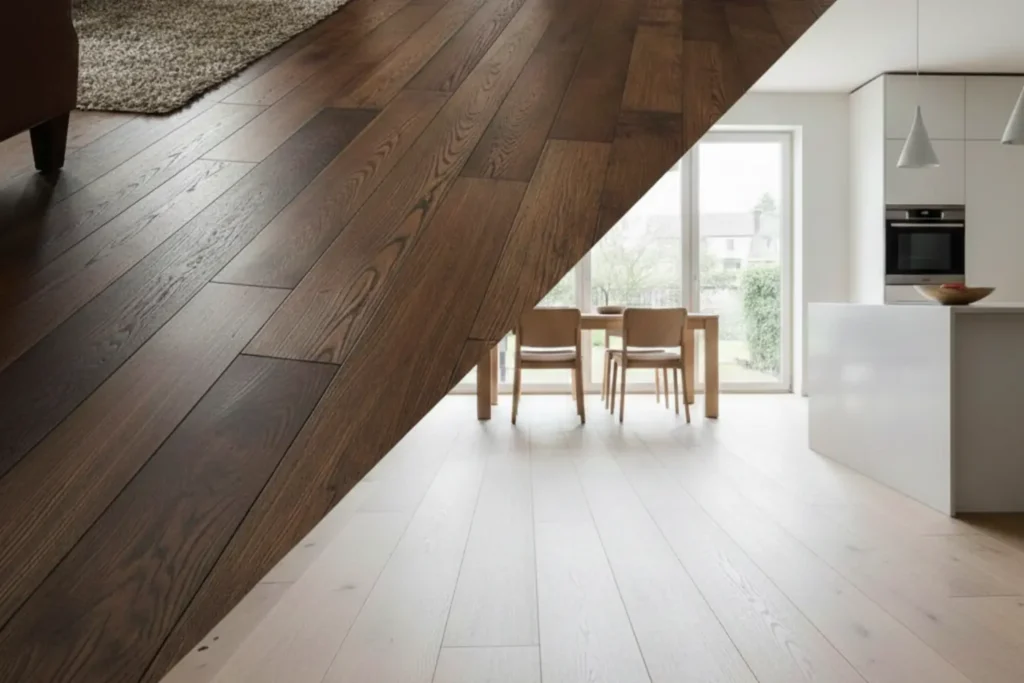
Choosing between hardwood and engineered wood flooring becomes simpler when you think about your lifestyle, where the floor will be placed, and how long you intend to live in your house.
The Basics: What Are Your Wood Flooring Options?
Solid hardwood flooring comes from one solid piece of real wood cut from trees such as oak, maple, or hickory. Engineered hardwood flooring has a top layer of real wood that is attached to a strong core made of multiple layers, allowing you to enjoy the appearance and feel of real wood while also benefiting from a sturdy base.
For a company like Vertex Flooring, their engineered wood flooring offers a stylish appearance while also being practical for today’s homeowners. In contrast, solid hardwood is still the go-to option if you want something traditional that will last a long time.
At-a-Glance Comparison
| Factor | Solid Hardwood Flooring | Engineered Wood Flooring |
| Construction | Single piece of solid wood per plank | Real wood veneer over layered core |
| Moisture response | Can warp or cup in humidity | More dimensionally stable in moisture |
| Refinishing potential | Can be refinished many times | Limited refinishes, depends on wear layer |
| Typical lifespan | Several decades with maintenance | Long-lasting with proper care |
| Installation limitations | Best above grade, wood subfloors | Works over more subfloors, including concrete |
| Budget fit | Higher upfront cost | Often more budget-friendly for whole-home projects |
Not sure which wood flooring option suits your home best? Talk to the experts at Vertex Flooring for personalized guidance on your space and budget
Why Engineered Wood Flooring Fits Modern Homes
Engineered wood flooring is made to deal with real everyday life. Its layered structure is designed to cope better with the changes in heat and moisture during different seasons compared to regular solid wood planks. This helps prevent issues such as gaps, bending, or warping over time.
That extra strength makes engineered hardwood a great choice for:
- Kitchens and dining rooms, where spills, steam, and foot traffic are frequent.
- Basements and lower levels, where too much moisture can cause problems for solid hardwood.
- Homes located in humid or changing climates, where the weather varies throughout the year.
Because it has a genuine wood surface, engineered flooring still provides the unique texture, patterns, and warmth that many people appreciate about wood. Many modern collections offer wide planks, European-inspired finishes, and trendy colors, making it easy to fit into both simple, modern areas and cozy, traditional settings.
From a project perspective, engineered floors are usually simpler and more flexible to install. Depending on the kind, they can be glued down, floated, or sometimes nailed down. They can also be placed over concrete or existing subfloors that wouldn’t work with solid hardwood. This flexibility can make things easier for workers and help keep project schedules and budgets on track.
If you’re leaning toward engineered wood flooring, explore Vertex Flooring’s curated collections to find a style and finish that match your home’s design
When Solid Hardwood Still Comes Out Ahead
Think in terms of decades rather than years, and solid hardwood is the best option. As each board is made of one solid piece of wood, it may be sanded and refinished many times. This allows you to renew the appearance or fix significant wear without having to replace the entire floor.
When selecting flooring, homeowners frequently favor solid hardwood if:
- They are looking for a floor that will last for many generations.
- They have rooms with regulated temperature and minimal moisture risk.
- They want to maximize future resale value.
In older houses or in areas with drier weather, where wood flooring is a component of the architectural style, the option to refinish it many times may make solid hardwood a wise long-term investment. Hardwood flooring never goes out of style. Moreover, if you love the idea of being able to change stain colors over the years or restore heavily worn areas back to new, solid hardwood is the best option.
Thinking long term with solid hardwood? Explore Vertex Flooring’s hardwood products to compare species, finishes, and installation options for your project
Cost, Care, and Everyday Life
When choosing flooring materials, the majority of homeowners are considering the cost, upkeep, and resilience of their floors to the use by children, pets, and visitors.
Budget & Overall Value
Because of the material itself and the installation, which may include more leveling, securing, and occasionally on-site finishing, solid hardwood typically has a higher initial cost. Engineered wood flooring has a tendency to be more affordable and yet provide the appearance and feel of real wood.
Engineered wood may provide greater coverage for the same money if you’re remodeling many rooms or an entire story of the house, without veering into “fake wood” territory.
Durability & Maintenance
Both choices are robust, but they fail in various ways:
- The real benefit of solid hardwood’s thickness and strength is that it can be sanded to remove significant scratches and dents throughout its lifespan.
- Although the thickness of the top layer restricts the possibility of refinishing engineered hardwood, it handles moisture and movement more effectively, making it less prone to structural problems like cupping.
Both require similar care on a daily basis, including felt pads under furniture, regular sweeping or vacuuming, and the use of appropriate wood-floor cleaners rather than steam mops or harsh chemicals.
Installation Flexibility
In terms of installation, engineered flooring typically comes out on top. Wood subfloors and above-grade installations are best suited for solid hardwood, which should not be used in basements or directly over concrete. Engineered wood may frequently be put over concrete slabs, radiant heat systems (check product specs), and existing subfloors that may not support solid boards.
Engineered wood is usually the safer and more practical choice if you are working in a finished basement, a slab-on-grade house, or a condo.
Ready to move from research to action? Share your room details with Vertex Flooring and get tailored recommendations on the ideal wood flooring for every space in your home
Is engineered hardwood better than hardwood?
If you are still unsure which one is better, the following points will make your final decision simpler.
Choose engineered hardwood floors if:
- You’re putting it in a basement, on concrete, or in areas where the temperature and humidity fluctuate more.
- You want real wood beneath your feet, but you also need a more manageable budget and installation versatility.
- You’re currently remodeling and looking for a chic, long-lasting flooring option that works with contemporary designs and finishes.
Choose solid hardwood flooring if:
- You intend to live in your rooms for a while, and they are located above grade and are fairly dry.
- You want the option to refinish many times and perhaps experiment with different hues in the future.
- You’re okay with making a larger initial investment in a traditional, long-term fix.
Engineered wood flooring frequently turns out to be a better choice for many contemporary homes because it has that real wood appearance. Solid hardwood continues to be a lovely option if the conditions are favorable and you are thinking in terms of decades.
When working with Vertex Flooring, a smart method is to discuss the specifics of your rooms and allow their staff to pair you with the materials and finishes that suit your lifestyle. That way, you are selecting the appropriate wood flooring for each room in your house rather than just choosing between “hardwood vs engineered” flooring.