
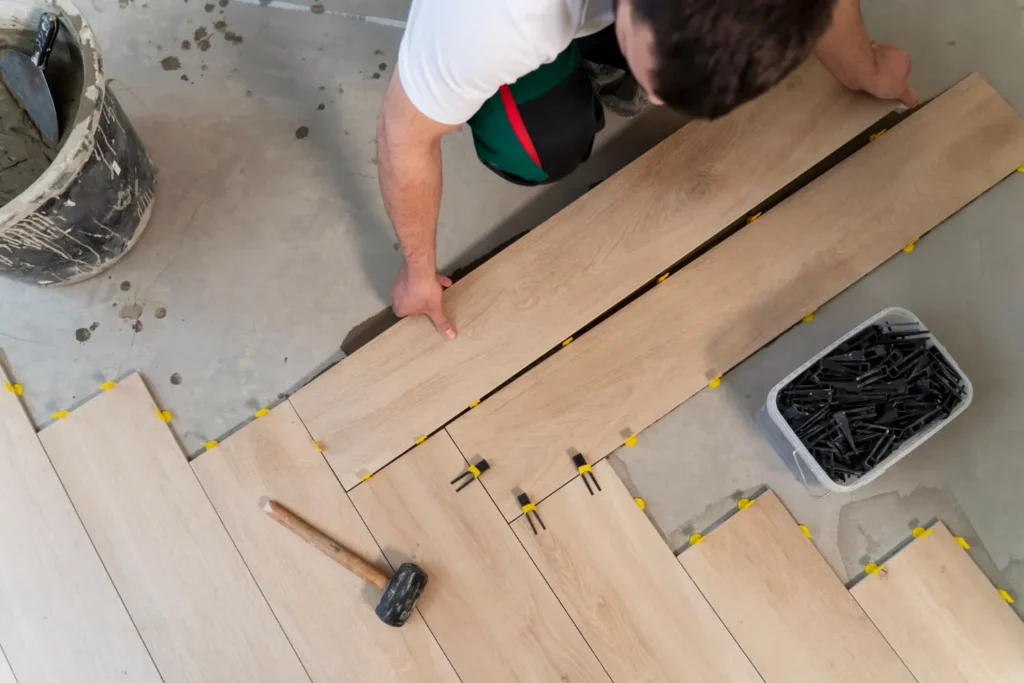
A flooring installation process goes smoothly when you know what’s coming: how long it will take, what you need to do before the crew arrives, and which “small” mistakes can turn into big headaches later.
At Vertex Flooring (Holliston, MA), we help homeowners, builders, and design pros choose durable, design-forward floors, like engineered hardwood and high-performance SPC vinyl, and connect you with the right path from selection to installation.
How Long Does Flooring Installation Take?
“How long does flooring installation take?” depends on material type, square footage, layout complexity, and subfloor condition. The fastest installs are usually floating floor installation (common with many SPC and click-lock systems). Glue-down and nail-down systems can take longer because prep and cure time matter.
Here’s a practical timeline you can plan around:
- Planning and measuring: 1-3 days
- Acclimation (as needed): commonly 48-72 hours for many wood products
- Subfloor preparation: a few hours to 1-2 days (longer if leveling/moisture mitigation is needed)
- Installation: typically 1-3 days for many residential projects (longer for stairs, intricate patterns, or large commercial spaces)
- Finishing touches: 2-6 hours (trim, transitions, cleanup)
- Move-back timeline: often the same day for floating systems
Your Flooring Installation Checklist
A good flooring installation checklist protects your timeline and your finish.
5-7 days before:
- Confirm the material and installation method (floating, glue-down, nail-down).
- Ask your installer what they handle vs. what you handle (furniture, toilets, appliances, etc.).
- Plan for noise, dust, pets, and kids (the “it’ll be fine” approach is always wrong).
48-72 hours before:
- If your product requires it, acclimate flooring in the install space, with HVAC running at normal living conditions.
- Keep temperature and humidity stable. This matters for wood movement and locking systems.
24 hours before:
- Clear walkways, remove breakables, and create a staging area.
- Confirm parking/loading access and building rules if you’re in a condo.
Subfloor Preparation: The Step People Skip
Subfloor preparation is the unglamorous foundation of a clean install. If it’s uneven, wet, or unstable, your floor can squeak, separate, cup, or feel “spongy.”
Professional installers typically check:
- Flatness/level: Uneven areas can cause click-lock failures and hollow spots.
- Moisture: Especially over concrete; moisture testing and site-condition controls are standard best practice.
- Cleanliness: Debris under a floating floor can create noise and weak points.
- Integrity: Loose panels, rotted spots, or old adhesive residue must be addressed.
What you can do: don’t assume your subfloor is “fine because the old floor was fine.” Old floors hide crimes.
What Happens During the Flooring Installation Process?
This is the typical sequence on installation day(s). It’s useful because you’ll know what “normal” looks like.
1) Protection and prep:
Installers protect paths, isolate work zones, and confirm measurements and layout. If you’re doing patterned installs (like chevron/herringbone), layout planning is extra important. Vertex Flooring offers distinctive pattern options in its collections.
2) Demo (if you’re replacing floors):
Old flooring is removed, and the team checks what’s underneath (subfloor condition is revealed here).
3) Subfloor corrections:
Leveling, patching, moisture mitigation, or underlayment installation happens now.
4) Installation (material-specific):
- Floating floor installation: planks lock together over underlayment; fast, clean, and common for SPC and some engineered products.
- Glue-down: adhesive is applied; timing and cure matter.
- Nail-down/staple-down (some hardwood installs): requires an appropriate wood subfloor and careful fastening.
5) Details and transitions:
Trim, reducers, stair noses, thresholds, and transitions are installed. This is where the floor goes from “new” to “finished.”
6) Final walkthrough:
You’ll review seams, transitions, and overall finish. Keep the leftover material box labels; they are useful for future repairs.
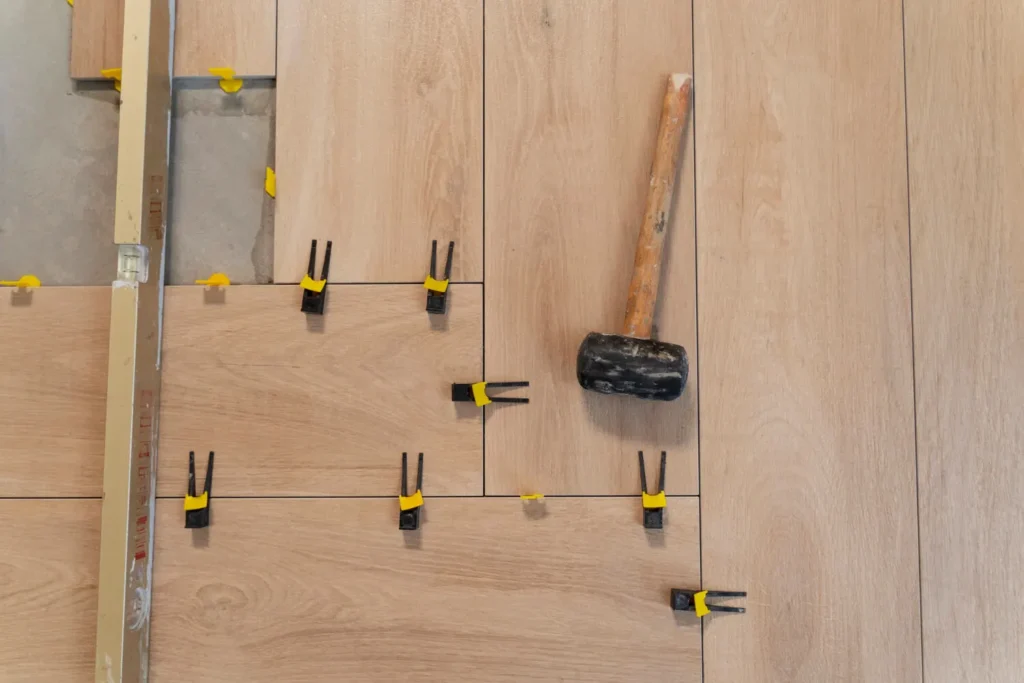
After Installation: How Soon Can You Use Your New Floors?
Your installer should give the final word because it depends on the system.
General expectations:
- Floating floors: usually walkable right away; furniture can often return the same day with care (pads, no dragging).
- Glue-down systems: may require waiting for adhesive to cure; rushing this can cause shifting.
- Wood products: stable indoor conditions remain important after installation to reduce expansion/contraction issues.
Common Mistakes to Avoid
1) Ignoring acclimation and site conditions
Skipping acclimation (when required) can lead to gaps, cupping, or movement. Many manufacturers recommend at least 48 hours (sometimes longer), depending on conditions.
2) Treating the subfloor like a suggestion
Unevenness and moisture are the top silent killers. Moisture testing and condition controls are baked into major wood-flooring guidelines.
3) Choosing the wrong material for the space
Bathrooms, entries, and busy households need performance-first choices. SPC vinyl is designed for high movement, water exposure, and wear; it’s great for active homes and commercial traffic zones.
4) Not planning transitions and height changes
Doorways, stair landings, and adjacent flooring heights must be planned upfront; otherwise, you get awkward lips, trip points, and rushed fixes.
5) Hiring installers without asking the right questions
A true “professional flooring installers” conversation includes:
- How they handle moisture testing and subfloor leveling
- Their plan for transitions, stairs, and trim
- Warranty details (labor vs. material)
- What they expect from you before day one
Why Smart Projects Start With Vertex Flooring?
Even the best installer can’t rescue a bad product choice. Vertex Flooring focuses on durable, design-forward flooring options, including engineered hardwood, solid hardwood, SPC vinyl, and specialty styles, supported by showroom guidance and a direct-from-manufacturer approach.
From their stated approach: quality craftsmanship, sustainable sourcing, and collections built for design pros and serious projects, with product lines that balance aesthetics and performance. If you want fewer surprises during installation, the smartest move is choosing the right floor before the first plank hits the subfloor.
A Smooth Flooring Installation Starts With Smart Planning
A successful flooring installation process isn’t mysterious. It’s a clear timeline, solid prep, serious subfloor work, and avoiding the predictable mistakes. If you want help choosing a floor that fits your space (and your real life), visit Vertex Flooring for showroom guidance and a free quote.
FAQs
How long does flooring installation take for an average home?
Many projects land in the 1–3 day range for installation, but subfloor prep, layout complexity, and acclimation can extend the schedule. Your installer should confirm a timeline after measuring and inspecting the subfloor.
What should be on my flooring installation checklist?
Plan for acclimation (if required), clear furniture and pathways, confirm who removes appliances/toilets, and stabilize indoor temperature/humidity. Also, confirm transitions, stair details, and where materials will be staged.
Why is subfloor preparation so important?
Flatness and moisture affect how the floor feels, locks, and wears over time. Major flooring guidance emphasizes moisture testing and proper site conditions, especially over concrete.
Is floating floor installation faster than glue-down?
Usually, yes, because floating systems click together and don’t require adhesive cure time. But speed still depends on subfloor flatness, room shape, and how many cuts/transitions are needed.
Do I really need professional flooring installers?
If you want clean transitions, correct subfloor work, and fewer long-term issues, pros are worth it. The biggest failures come from rushed prep, poor moisture control, and sloppy finishing details.