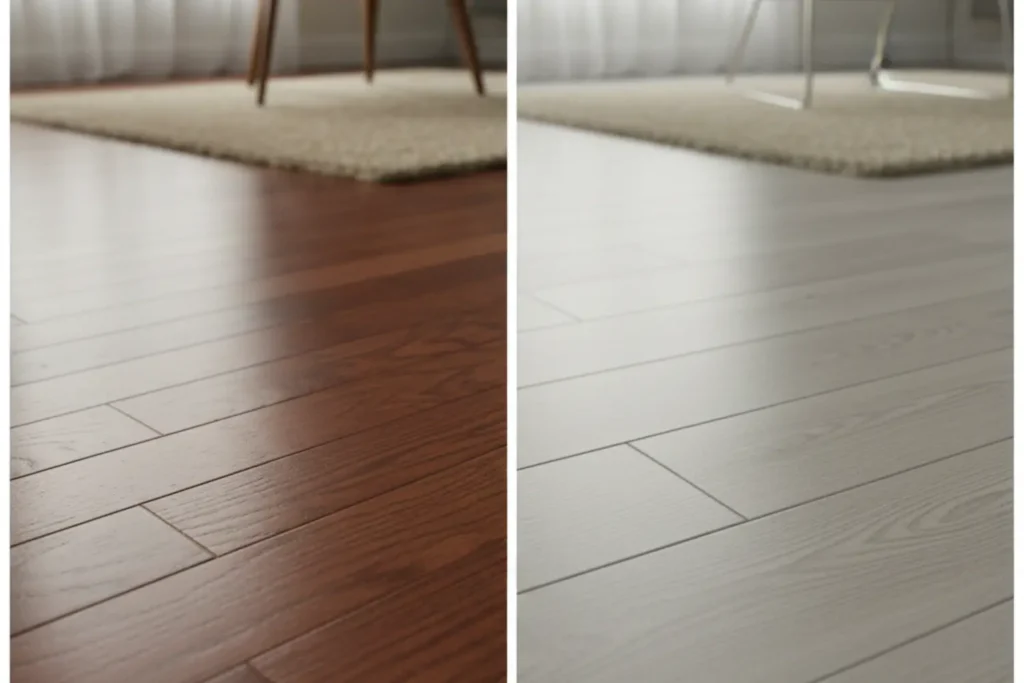
Choosing the right flooring is one of the most significant decisions in any construction or home renovation project. Floors are not just a surface to walk on, but they also define a home’s style, comfort, and long-term value. With popular flooring choices trending today, homeowners consistently narrow it down to options between hardwood and luxury vinyl plank. However, choosing between hardwood vs LVP, which flooring could best fit your budget, lifestyle, and home is challenging.
At Vertex Flooring, our experts help homeowners, designers, and builders select flooring that delivers visual appeal, everyday comfort, and long-term performance. Here is a guide that provides a comprehensive comparison of hardwood and LVP in terms of maintenance, cost, design, durability, and moisture resistance to help you make an informed decision.
Hardwood vs LVP: Key Understanding
Before comparing the performance of hardwood and luxury vinyl plank, it is important to understand what fundamentally sets these two apart.
What is Hardwood Flooring?
Hardwood flooring is designed from real wood harvested from trees such as hickory, oak, walnut, cherry, and maple. Each plank has natural grain patterns and color variations, making each floor unique. They are primarily categorized into solid hardwood made from a single wood throughout, and engineered wood, which is a real wood veneer layered over a stable plywood core. Both deliver timeless beauty and authentic warmth, enhancing property value.
Visit the Vertex Flooring showroom to compare hardwood and LVP floorings, designed for durability.
What is Luxury Vinyl Plank (LVP)?
LVP is a high-performance synthetic flooring designed to replicate the natural wood look. The modern LVP captures wood grain textures with remarkable realism by using advanced imaging technology.
Luxury Vinyl Plank is constructed in many layers, including wear layer for scratch and stain resistance, design layer for realistic visuals, core layer for stability and rigidity, and backing layer for comfort and sound absorption. Such an engineered structure makes it one of the most versatile following material available today.
Hardwood vs LVP: Durability
While choosing a flooring material, durability is one of the most considered factors in high-traffic households. Here’s how each performs over time:
Hardwood Flooring Durability
Hardwood is primarily known for its long-term durability and structural strength. It can last 50-100 years with proper care, be sanded and refinished multiple times, withstand everyday foot traffic in living spaces, and develop character and patina over time. However, hardwood is sensitive to moisture and humidity changes, scratches from furniture and pets, and denting from heavy impacts.
Moreover, hardwood remains a long-term investment for controlled indoor environments.
LVP Durability
LVP is engineered for real-world conditions performance. It has excellent scratch and dent resistance, ideal for homes with children and pets, performs well in high-traffic homes, and maintains consistence appearance over time. LVP is often a smart choice for homeowners looking for low-maintenance flooring.
Luxury Vinyl Plank Flooring Pros and Cons
Before choosing, it is significant to understand the luxury vinyl plank flooring pros and cons to make the right choice.
Pros
Today, LVP is popularly preferred for eliminating many common flooring challenges. Below are a few of the significant advantages:
- Wide range of wood styles and finishes available
- Comfortable underfoot
- Affordable cost compared to hardwood
- Waterproof and moisture-resistant
- Easy to clean and requires low maintenance
- Faster and flexible installation
Cons
While LVP is a popular choice, there are a few limitations associated with it:
- Refinishing cannot be done like hardwood
- Has slightly lower resale value compared to real wood
- High demand for natural materials
LVP vs Hardwood Cost – What is the Smarter Financial Choice?
Cost is often the deciding factor when choosing between hardwood vs LVP. Flooring is a long-term investment, and understanding upfront, repair, and maintenance costs with long-term value can help choose the one that makes financial sense.
Upfront Costs
LVP usually has more affordable upfront costs. The material costs less while saving the labour cost due to its click-lock or floating system. This allows faster installation with less preparation work. On the other hand, hardwood is comparatively expensive, reflecting the time, resources, and craftsmanship required to source and mill real wood. Hardwood flooring requires skilled labor, precise cutting, time, and careful installation, adding to the cost.
Long-term Financial Value
Hardwood is known for lasting longer, as it can be refinished multiple times and can last for decades. Meanwhile, hardwood flooring has good resale value, making it a long-term investment. Consequently, though LVP is durable, it cannot be refinished. Once heavy wear is seen, replacement is the only option. However, it is an ideal cost-effective solution for homeowners, as it has low costs lests and requires minimal maintenance.
Choosing the one with the best value depends on whether you prioritize immediate budget efficiency or long-term equity.
Hardwood vs LVP – What is the Best Flooring for Living Room?
The living room is always the heart of a home, and not choosing the right one can affect aesthetics, comfort, and durability.
Hardwood is best for the living room if you are looking for classic elegance, natural warmth, and seamless integration with upscale interiors. Hardwood flooring remains unmatched for a premium, timeless look.
Meanwhile, LVP offers realistic wood visuals, comfort and a warmer underfoot feel, and better resistance to daily wear and spills. Modern LVPs are a replica of real wood and require low maintenance.
Waterproof Flooring – A Key Differentiator
Moisture resistance is the primary differentiator when deciding between hardwood vs LVP flooring for long-term use.
Hardwood can wrap when exposed to moisture, swell in humid environments, and crack in intense dry conditions. On the other hand, LVP has 100% waterproof cores, is ideal for kitchens, bathrooms, and basements, resists spills and humidity, and performs well in outdoor floor plans.
In terms of waterproof flooring options, LVP delivers unmatched moisture resistance.
Why Choose Vertex Flooring for Your Home?
At Vertex Flooring, we believe that every home and project is unique, requiring personalized recommendations based on lifestyle, budget, and design goals. We offer premium hardwood collections, high-performance LVP solutions, professional installation services, and project support throughout. Our focus is not only on selling floorings but also on helping you find the right one that lasts.
Contact Vertex Flooring and schedule a project estimate. Take a first step toward transforming your home.